Showing posts with label death. Show all posts

Friday, November 24, 2017

Episode 78: Happy Thanksgiving to Sabine

Dear, Sabine--

Amy Winehouse's "Will You Still Love Me Tomorrow?" just came on and, of course, I'm immediately in your flat in Peuderhausen as you lie in your hospital bed in the living room. Gaby's there, and one or two of the ladies from Lithuania. The candles are glowing, each of the tiny wooden angel candle holders your mother collected are lit, the windowsills alight with them. The lyrics now say, "Will You Still Be Here Tomorrow," and you are, if not in this dimension, than in some other, if only if it's in my heart and mind as I wish with every cell of my body that I could hold you and talk to you again.I can't do the former, but I can do the latter.

This is so similar to how we corresponded for years, speaking as we did then into our little cassette tape recorders, sharing the details of our days most nights before a bed, a ten-year conversation that started in single cassettes sent to one another across the ocean and then to packages of four or six cassettes at a time. I've never had a closer friend, because something inhibiting disappears when sharing like this, over time and space, in our most intimate moments when alone and reflecting on the most important aspects of our inner and outer worlds.

The things we loved. The parents who raised us, who lived and  who each died in the time when knew each other. In fact, I think it was the death of, first, my father, and four years later my mother during those years we worked together in our DC lawfirm, that first drew us so close together. And then, in the latter end of our cassettes, your agony as you watched your beloved father die, and then drew closer to your mother, with whom you'd always had a problematic relationship, had to move from your childhood home into a retirement place where she did thrive for some time but then died with you in the bed beside her.

And your love affair with a little baby you'd come to rock and bottle-feed in the Lithuanian orphanage where you did this with so many others but, especially, this one, who was always and then officially became your daughter, the child whose name means "Life" who, just a few days before you left this dimension, whatever it is, and moved on to the next, whatever that is, first knew that you were leaving us. But you'd arranged for her to stay in the loving family she'd always known, and from the photos I've seen she's grown into a thriving, lovely young woman who looks so much like you it's uncanny.


Thursday, March 5, 2015

Episode 59: "Connecting All the Parts," or Seeing the Pattern of One's Life When Facing Death


One of my heroes, Oliver Sacks, is dying.

If you haven't read any of Sacks' books, you must. Years ago, I read The Man Who Mistook His Wife for a Hat, which whetted my appetite for more knowledge of the brain and its workings, particularly as they relate to memory, consciousness, and personality.

Oliver Sacks--Photo from NPR.org
Sacks also wrote Awakenings, which was made into a film with Robin Williams playing Sacks as a young doctor treating patients with encephalitic lethargica, a disease that leaves many of its sufferers in a catatonic state. Sacks treated these patients with a drug that brought them "back to life" but tragically was not a permanent cure and the patients lapsed back into catatonia after a fairly brief period of consciousness. In the years since the book came out, Sacks has been criticized by some who say he didn't properly conduct his research on these patients, but as far as I'm concerned the man's compassion for his patients shines through in all the pieces I've read that he's written. I believe his record, as recorded in his writings, and his contributions to neurobiology need no apologies.

Encephalitic lethargica is rare, but a sudden rash of patients landed in hospitals just after World War I and the Spanish Flu epidemic, leading some scientists to believe the condition is caused by a virus. However, post-mortem examination of brains of some of its sufferers have shown no evidence of a virus--so who knows. Fortunately, researchers continue to research cases as they appear, and the more we can learn about the brain the better for those of us who have neurodegenerative disease.

As a sufferer of hypersomnolence--which some encephalitic lethargica patients have rather than sheer catatonia, I'm obviously intrigued with this condition and all others that result in a less-than fully-conscious state. My neurodegenerative disease was only recently diagnosed, and the exact type of disease has yet to be determined. White matter lesions throughout the brain, found in my brain in abundance on a recent MRI, is a sign of a number of different degenerative conditions, so the differential diagnosis (investigating the different diseases I may have and coming up with a definitive diagnosis) has not yet been conducted. In fact, little is going on in that department. It's more of a "wait and see" type thing, itself quite unnerving.

More than the encephalitic lethargica angle, which I do plan to read much more about, right now I'm more interested in Sacks' thoughts in an essay he recently published in The New York Times as he contemplates his imminent (thought hopefully not too imminent) demise ("My Own Life: Oliver Sacks on Learning He Has Terminal Cancer, The New York Times, February 19, 2015). A cancer in his eye, treated nine years ago, has all these years afterwards metastasized to his liver and is now incurable.

"Over the last few days," Sacks, who is 81, writes, "I have been able to see my life as from a great altitude, as a sort of landscape, and with a deepening sense of the connection of all its parts."

Though Sacks quickly goes on to say he is not yet done with life, I want to stop and think about this line for a moment. It's worth repeating. "I have been able to see my life as from a great altitude, as a sort of landscape, and with a deepening sense of the connection of all its parts."

I'm an avid reader and lover of libraries and bookstores. Years ago, I was in Baltimore at the University of Maryland bookstore and happened upon a book written by a social worker that intrigued me after reading the blurbs on the back. I bought the book.

This social worker had spent time with older adults, "seniors," if you will, gathering their life stories, and what had struck her was that most of them told her that, as they faced the end of their lives, they recognized their lives had had an underlying pattern, a purposeful pattern, in which things had happened for a reason, one leading to the next and the next until a sort of tapestry had been woven that represented their lives.

Though I never finished the book (a rare thing for me, but I was into so many things at the time that I somehow lost track of it), I remember sensing great relief that these folks had felt this way and that enough of them had done so that the social worker had recognized the, ahem, pattern.

I found the book not too long after losing both my parents in the space of four years while in my twenties. I'd read lots of books on death and dying by then, but this book gave a fresh perspective, one about life more that death, yet with added urgency.

I so wanted to believe life had meaning, that my parents' lives had had meaning, that my life would have meaning--that all lives have meaning. I still do. Yet, given my inner skeptic, I still remain open on the question.

Do our lives have purpose and patterns that "connect all the parts," or are we merely random examples of life, no more significant than a tsetse fly?

Oliver Sacks' saying the same essential thing that the seniors' narratives in the book had strikingly shared--this sense of meaningful patterns--is again reassuring. I can't help but face my own demise after my diagnosis of neurodegenerative disease. That this reassuring sentiment is now shared by my personal brain guru makes the idea just that more meaningful.

I think a lot about my brain these days, and I think about death a lot these days.

And so here is one of those connections Sacks suggests--a pattern, if you will, at least as it relates to one aspect of my life--my fascination with the brain. My parents' deaths, the social worker's book, and now Oliver Sacks' essay have nicely woven together. Add to that pattern another book that immensely comforted me after my parents died--Viktor Frankl's Man's Search for Meaning, written with hope and heart about his experiences in a German concentration camp--and the fact that I just this moment looked up Frankl and was reminded that he was also a neurologist--and, well, the pattern weaves on.

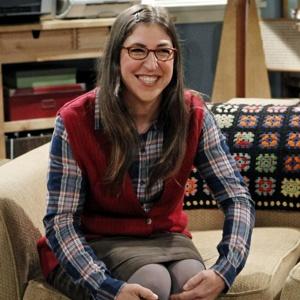
If I'd known what I now know about myself when I graduated from high school at the age of 16 (after skipping my junior year), I would have gone straight to college and studied neuroscience rather than taking the massive detours in life I did to arrive I'm not quite sure where. As I've said before, I share more with Amy Farrah Fowler than I care to admit--though I just did.

I have more in common with Amy Farrah Fowler
than I care to admit--though I just did!
Of course, the idea of lives as narratives is not brand new. Though I haven't been an active student since first becoming debilitated by illness in 2008, I am about halfway through the course work for my PhD in English (and thinking about trying to finish now--why not?). I've studied the concept of identity and personal narrative through that lens, a lens that does not conflict at all with my interest in neuroscience. These two seemingly disparate fields--English and neuroscience--connect (there's that word again!) in this arena. Our memories form the narrative of our lives, and memory is a key component of the scientific study of the human brain, just as narrative is key to English literature and identity studies.

Yet, as reassuring as all this is, it also lends itself to a scarier scenario, the scariest  part of neurodegenerative disease. Will I lose my narrative, my memories?

My grandmother was sharp as a tack and lived in her own apartment until she turned 86 and started calling my mom at 2 a.m. and asking her why it was so dark at 2 in the afternoon, putting the milk carton in the oven, and other wacky things. I saw her disease rob her of who she was, though she always managed a smile even when the nurses at the nursing home tranquilized the bejesus out of her, as was customary at the time.

And so, even if my demise isn't immediately imminent, I can't help but worry that I will lose my own narrative before actual death occurs, a sort of death of the personality, the person I am, or who I believe myself to be.

Does my life have a meaningful pattern? Do the good and bad things I've done or experienced all add up to a life that makes sense in some grand scheme, if only to myself? I have inklings of that sense of pattern, and that's encouraging.

It's easy for my romantic side to cling to those, but, in the dark nights while I'm wide awake and the rest of the eastern seaboard of the United States is sleeping, my inner skeptic creeps in and the idea that my accidental life on this random planet in an incomprehensible universe means nothing at all, nothing whatsoever.

And then I read something amazing by Oliver Sacks, and the darkness lightens.

No matter what the ultimate answer to this question of meaning ends up being, I have to agree with Sacks when he assesses his life in his new essay: "Above all, I have been a sentient being, a thinking animal, on this beautiful planet, and that in itself has been an enormous privilege and adventure." The privilege has been ours, Dr. Sacks. And the biggest privilege for me has been giving birth to the two best sons on the planet.


Epilogue: In a truly strange twist to this episode, I was just putting the caption on my Amy Farrah Fowler photo above when Honey walked in the room. Knowing my nuttiness for turtles, he said I needed to go to the living room and watch The Big Bang Theory: Amy (Farrah Fowler) and Sheldon were about to buy a turtle together. Just as the caption I'd just finished typing says, I have more in common with Amy than I care to admit.

Coincidence? Hmmmmmmmm

A little feller I rescued from the middle of the road
shortly before his release (and me)


Monday, September 23, 2013

Episode 29: Background Music While Sabine Leaves this World

NOTE:  All persons' names other than Sabine's have been changed to maintain their privacy.
Image of the cover of Amy Winehouse's Lioness:  Hidden Treasures

Before you start "watching" this episode['s text cross the screen, delivering visual messages--hopefully], you must turn on your audio and listen to this version of Amy Winehouse's "Will You Still Love Me Tomorrow?"  NOT the one that is on most of the compilations; this one is in the soundtrack of The Diary of Bridget Jones, a totally arbitrary fact, since I heard it as the lead song on the European press of Lioness:  Hidden Treasures, while the U.S. press of that album has a different version I like much less.  This one is simpler, not so produced, which fit perfectly into the gentle but good vibe mood we wanted while listening to it over the holidays last year, while we sat vigil by Sabine's bedside.

Here's the correct version:  http://www.youtube.com/watch?v=Ludxpkyrab0.

Only by playing that version of Amy's "Will You Still Love Me Tomorrow?" as you "view" this episode might an ache rise in your chest similar to the one now in mine as I think about my last days with my dearest friend, mentor, and treasure--Sabine.  I've written about her before, so you may want to catch up on the story by going to earlier posts--Click on "Sabine" in my labels on the right-hand lower side of my first screen to access those.


Tuesday, April 2, 2013

Episode 23: A Sabine Christmas

I'm coming to this topic raw, unpolished.  Uncertain of what I want to say or even how to begin to say it.  I imagine I will massage this episode innumerable times in the future, and I'm not sure I'll get very far with this very first attempt.

I want to write about it, to connect with the persons and places and emotions I connected with then, but the task is daunting on so many levels, the most daunting being the pain I feel when I think of her, lying there in the hospice bed, sleeping most of the time, thankfully--she wasn't in a lot of pain most days, but exceptions certainly came, and even if medication kept the physical pain at bay the psychic pain was palpable to us all.

We tried to do what she'd wanted.

Sabine knew she was dying, and she and I had shared emails in which we talked about what we'd want in our last days.  I'd visited her a year ago in Albania, and I was dumbfounded that she had lived another year after her surgeon told her they'd decided her cancer was inoperable--in other words, it had won.  The only way to defy Sabine's determination to live was to be relentless and brutal, and her cancer was both--though for the longest time she'd say she had cancer, but cancer didn't have her.

Thursday, March 28, 2013

Episode 21: From Bad to Worse--Or--Just Another Typical Day

Flu.

Something so mundane, yet something that will righteously kick your ass.

As it has mine over the past week plus.  Today was my first day back to the office, yesterday my first day on email--something that never, never happens.  Hell, the whole month I was in Europe I was online and in touch, wired and ready for sound, practically every day. It was more fun checking in after a day in the Alps, though, than it was last night still sweating and miserable thanks to a tenacious round of aches, fever, major killer cough, malaise, headache, head-stuffed-with-cotton ache, dizziness, a touch of nausea cum diarrhea ... well, you get the gist. On the other hand, I was only seeing the Alps (if I'd had a bucket list, they would've *pun alert* topped it) because my dearest friend Sabine was then dying of cancer and had invited me (and paid for me) to spend a month with her as her family and friends said good-bye--so that part was NOT fun. It was beautiful, because of the way Sabine had arranged everything--and, thus, fun did occur, as when we celebrated Christmas in German style with her family (actually, no blood relations there, but family nonetheless) who would adopt her adopted daughter after her death).

So, obviously, things could be far worse--but tell that to a body racked with flu. So, back at work, my "To Do" list has had an increasing "Should've Damned Done That!" category, and let me tell you it is not much fun to lie around hoping to die at the same time you're stressing about who's going to lay into you at work for something you should've done already, the whole time kind of praying that everyone lets you slide because the flu is the flu, an equal opportunity ass slayer.

In fact, not to make light of a sad subject, the flu killed my grand-daddy whom I never knew when my own daddy was only four years old.  At least that's how I've pieced things together, my father having been born in 1915.  [MY, I am truly old myself, as that statistic lays bare. But I like when, where, and to whom I was born, so I really don't care that this grand journey has cranked along quite a while.  Frankly, I'm lucky on a variety of levels that I've come this far!]

My dad told me that his father died in a gutter in the city, and from that I'd gathered he'd been a drinker or, more accurately, a drunk.

But in later years I learned about the 1918 flu outbreak, which lasted more than that one year, into the year when Dad would have, in fact, been four, and the fact that hundreds, thousands, were dying in the streets of Washington, DC, and suddenly my grandfather became a hero in my eyes. He dared not bring his illness home to his wife and little boy, so he died in the streets with the masses though I've no doubt my grandma (from whose name the "Dell" of the Mary Dell Show is derived) would have tucked him into bed and brought him tea and homemade soup to ease his dying days had he actually gone home.

I learned that and saw photos of the dead bodies in Influenza--a hell of a book, by the way, though not quite as masterful as And The Band Played On, but the message of both was that a major pandemic of any kind will turn society upside down, and not only the disease itself is ugly. One day I'll get around to ordering my paternal grandfather's death certificate from Vital Statistics.

On my mom's side, I already know that her dad died of an aneurysm of the aorta in his 50's--maybe a year or two older than I am now. I remember that because my brother and I were kids when she told us that.  He might have been all of twelve, and without thinking he laughed and said, "Wow, that's sounds cool!  An aneurysm of the aorta!"

Of course, I knew that immediately as the words came out of his mouth he'd realized they weren't exactly the right thing to say to your mom just after she's told you about her father's death. And so I cringed when she said, "Well, I don't think that's something to laugh about" or something equivalent. I hope Mom also realized immediately after she said that that my brother would have figured this out out and already felt bad about having said that--my brother J was quite sensitive.

In other words:  AWKWARD!

But I know the cardiovascular system on both sides ain't the greatest.  MY dad died of a myocardial infarction, MI for short (clever, huh?) just shy of his 70th birthday this very month .... uh, in 1985.  I was 25, and he'd gone with Mom to their ocean getaway and died in the shower the morning after a night of dancing to Big Band music, the music they'd danced to the night they met in 1947 at the Spanish Ballroom in Glen Echo Park.

TO BE CONTINUED