Showing posts with label chronic disease. Show all posts

Tuesday, November 1, 2016

Episode 72: Upon Beginning Hepatitis C Treatment, the Bizarre New Experience of Hope

"Hope is the thing with feathers."
Yes, I know this quotation is practically a cliche now, but as someone who is about to finish her PhD in English somewhere around the ripe old age of sixty, I could not forego the opportunity to quote a little Emily Dickinson who, if I were concentrating in American Literature, would be my gal. As it is, I'm in British Lit, and I still haven't figured out who to choose for my focus--I have at least five favorites.

As usual, focus eludes me.

So, let me NOW get to the topic of the day: Tomorrow I start an eight-week course of treatment for Hepatitis C, Genotype 1a, on Harvoni. Perhaps, just perhaps, when I finish I will be blessed with the talent of focus, which has never been one of my greatest attributes, but which has now pretty much completely flown the coop of my brain.

"What?' you ask. "Didn't you, Mary Dell, just air an episode bewailing your inability to afford treatment?"

Yes, in fact, I did, and that is what I believed. However, the stars aligned, and tomorrow I will receive, at no cost to me, my first shipment of a month's supply of Harvoni. I received a grant for the copay of nearly $4,000 of the $50,000-ish cost of the treatment, and before anyone yells that it is the people who aren't working who don't have to pay, which isn't right, the fact is that I have worked my whole life and only stopped when I got too sick to do so full-time.

Before you judge, walk a mile in my shoes. If you can manage to walk a mile; I'm not sure I can anymore. Once I tried to walk from my honey's house to mine, a distance of 1 1/2 miles, and I couldn't even get halfway. A woman pulled over to me, where I sat with my head in my arms on the side of the road, and offered me a ride. I don't know what would've happened if she hadn't.

Besides, maybe I'll be cured, and maybe that cure will have a significant effect on my degenerative brain disease, my sleep disorders, and my worst foe, a weakness and lack of energy that has nearly destroyed my quality of life. And if I'm cured and can do it again, I would love to go back to work and bring in some cash.

This being on disability is no joy, let me tell you. I pull in a fraction of what I made as a college professor for some years and as a grantwriter at a non-profit organization for nearly a decade. My darling cottage is not so darling anymore because it's in desperate need of maintenance, but I can't afford that.

Winter is Coming fills me with dread, because keeping my little poorly insulated 1940s house warm during bitterly cold mountain winters will suck even more out of my budget when I already live on the edge of being turned out of my home. I have no luxuries, although my son and I do go out to restaurants now and then. Hey, I was spoiled by my father, who took the family out to eat every Sunday night. My grocery bill these days is small because, with my conditions, I have little to no appetite, so I see any occasional night out as an opportunity to get some nutrition in me.

I do love to cook, but now we're back to the original problem: my fundamental lack of energy, my general exhaustion.

I do so hope that my energy problems will be cured along with the Hep C! I'll try to regularly check in to let you know how the treatment is going.

Hope about my future is fluttering inside me for the first time in a very long time. It feels weird; I've forgotten, honestly, with this bubbly sensation felt like. It's very much like a thing with feathers beating against my rib cage--a bluebird, perhaps, flitting through the trees as a new dawn breaks.
________________

N.B. For a wonderful photo of a bluebird in flight, see a blog by Bud Titlow in the Tallahassee Democrat serendipitously titled "Eastern Bluebird--Is Happiness on the Way?"

Tuesday, July 5, 2016

Episode 70: On Remaining Engaged and Focused, Or The Lament of Living with Severe Chronic Disease

Robert Pinsky, writing about Stevie Smith's poem "Thoughts on the Person from Porlock": But maybe we are also ridiculous for smiling at Smith's expressed longing for a Person from Porlock, while we fail to appreciate her genuine, heartfelt misery: misery of feeling the immense human desire for accomplishment, engulfed by our limitations. Under its charm, her poem grieves for the fleeting human capacity, for poetry, for recalling dreams and ideas, for work, for focus itself. 
Since giving up my job due to my smorgasbord of chronic illnesses--and receiving Social Security Disability Insurance benefits to keep me going, thank goodness--I have confronted the usual suspects that anyone who is forced to walk this road has or will encounter:  lack of sex drive (discussed in earlier episodes) is a major one, of course, but even more worrisome to me (if not to my Honey) is a greater lack of drive, period.

Until I saw a Linda Rondstadt interview in which she discusses the complete lack of motivation brought on by her Parkinson's Disease--she says she doesn't do much of anything anymore other than lie around and read books--I didn't realize this ponderous lack of motivation for just about everything was due to my neurodegenerative illness. I figured it had to do with fighting against depression--but until very recently I haven't felt at all depressed. The desire to do things, to make things, to make things happen, was still very much alive, but a correlating motivation was simply missing.

I actually saw this medically described in an article about being unable to get up from sleep in order to go to work or do anything else, which I suffered from in the last five years or so of my working life. I'll try to find that article again, but the essence was that it takes three components to motivate a person to get up from bed, or, I'll extrapolate, to move from one activity to another, which I also have terrible problems accomplishing.

The three components are desire, motivation, and (if I remember correctly) ability. All those days I lay in bed, sleeping through alarms and even prescribed stimulants, I had immense desire to go to work. I loved my work. I loved my coworkers. I loved my job. Oh, it had its stresses and its aggravations, as any job has, but the rewards of doing good work for a good organization with a good mission, and seeing results, and all those other wonderful aspects of having a good job meant the world to me. The last thing I wanted to do was show up late again--it was downright embarrassing. I wanted to get up and go to work, dammit!

So, desire was not the problem. I had plenty of desire. Ostensibly, I also had the ability. I could freely move my body (or so I thought). However, studies show that the degenerating brain may not work properly to make these things happen, so I would have to say my ability was impaired. That, I suppose, is what all those doctors' reports and my own statement showed the feds when they reviewed my application for benefits--but for a person who was always a "self-starter" and somewhat of an over-achiever, this is a bitter pill to swallow. That ability malfunction also, of course, affected the motivation function, the actual spirit that animates the body when it decides to move its legs from the mattress to the floor and stand up.

So weird. The whole thing is so weird. As an over-achiever, I never dreamed I'd come to a place in which I'd be unable to do whatever I set my mind to doing. But here I am. It's as if I've literally burned myself out, though it's my brain that's burning out, filling itself with little white matter lesions that are playing havoc with my life. And it's a real despair to realize that, even for those things I'm most passionate about, I may no longer have the capacity to carry out what needs to be done.

The latest "big" thing I want to do is to preserve a swath of woods in my town in which a colony of pink lady's slippers--North American native orchids--as well as many other native woodland wonders grow. I've already received the verbal support of the director of our local university's ethnobotany program, and I just got a letter from the small city where I live offering its support, along with its concerns. Those concerns were ones I had already assumed--I would need to get a group of citizens together who care about preserving our natural flora in order to raise money that we might need as a match for any grants we might get.

Pink lady's slipper (Cipripedium acuale)
Photo from UW-Madison, Department of Botany

As a successful grant writer, I know I can write the grant proposal. Or at least, I used to be able to write the grant proposal. And I spent years doing coalition-building and bringing projects to fruition in my job, so that part should be cake as well.

But I'm afraid. I'm afraid that all this desire will go nowhere. Somewhere along the line I'll let the ball go. I'll get started and then I'll disappoint people. I won't follow through.

In short, I've become a flake.

I can't commit to anything.

If I say I'm joining friends later, nine times out of ten I don't make it--I'll be asleep, or I'll be unable to motivate myself off the couch.

If I can't be counted on to carry through on that--the most pleasurable thing I know of other than spending time with my Honey and/or my kids--how can I be counted on to carry out anything else?

And so, I have to say, reading the lines by Robert Pinsky in the epigraph did make me feel better. This is a human flaw, not just a flaw of those of us with chronic disease. However, the flaw truly does become pathological, nearly insurmountable, with this brain I have. I fight it--I do. I start things with full intentions. But I disappoint myself again and again and again. It's kind of horrible.

I know I have to bull through this somehow, but I also have to be realistic. Perhaps I could find a champion for my lady's slipper cause who has the energy and ability to see the project successfully through, even if it is "my" baby.

But I do know that only I can muster the desire, motivation, and ability to write my books--my fairy book for young girls, my memoir, poems, fiction--and that's the greatest fear of all: that I will leave this world without having put those memories, those ideas, those dreams onto paper and maybe, just perhaps, being remembered for that.

And it's hard not to get depressed in the face of this fear, and this reality, which is the struggle I'm now going through. It helps to write about it, I guess. I found the Pinsky quotation quite by accident--by watching an old episode of Inspector Morse, in fact, in which he calls his sergeant "The person from Porlock." That led to an Internet search, and my reacquaintance with Coleridge's "Kubla Khan," and with Robert Pinsky's thoughts on the Smith poem.

Those are the happy episodes that keep me going. Like maybe there is a purpose to my life after all. And, no, I don't want to read A Purposeful Life or any of that. My metaphysical beliefs have atrophied along with my brain, I guess. I just want to be able to do, and to make, and to make things that matter. That's all.

Indeed, I lament "the fleeting human capacity, for poetry, for recalling dreams and ideas, for work, for focus itself."

For now, I have the rest of an Inspector Morse episode to watch--and this one, "Twilight of the Gods," has John Guilgud in it! There still are pleasures left in life!

Sunday, January 10, 2016

Episode 68: Hepatitis C and Parkinson's Disease Linked--Could This Be the Answer?

I hate writing about my health all the time, but I guess I want a record of what I've gone through in case it helps anyone else. Maybe it will help my kids someday to understand why I have had so little energy and have fallen so far in my life, from a promising career as a college English professor some seven years ago to my current status as poverty-stricken, disabled fifty-something slug.

Etsy T Shirt Slug Life


I've tended to downplay my hepatitis C since being diagnosed early in the 2000s after giving blood for the very first time. I don't like needles, so I'd avoided giving blood my whole life, but while teaching college-level classes in the local high school I was talked into donating by my over-achieving kids. I wanted to help them reach their goals as Red Cross volunteers. And I subsequently received a letter from the Red Cross telling me my blood had been tested two or three times, and it was positive for Hepatitis C.

Sometime between 1979 and 1983, the years my boys were born, I was given two D and Cs (procedures to scrape out the uterus) at Columbia Hospital for Women in Washington, DC. I kept bleeding heavily after the birth of my first baby, so my OB/GYN suggested the procedure. The first one didn't work, so they did it again. I was given two pints of blood in a transfusion during one of the procedures. This was the pre-AIDS era, and Hep C didn't even have a name yet (and wouldn't until 1989). Blood was not screened then, and IV drug users were the most common blood donors since they could do it for money.

I had no clue that I had this disease until some two and a half decades later. And now, it has been--yikes!--close to forty years since the virus began circulating in my veins. Thus far, my liver has proven strong. My last liver biopsy--admittedly some six or seven years ago--showed no fibrosis, the first step toward cirrhosis and potentially liver cancer that can happen due to infection with Hep C, or, rather, HCV, as the virus is known.

My genotype (1A) is the most difficult to cure. In the past, treatment required 49 or so weeks (nearly a year) of interferon injections as well as daily oral doses of ribaviron. Interferon has nasty, sometimes debilitating side effects. Not only that--the grueling treatment is only effective in about 50 percent of those with my genotype. Pretty lousy odds when having to potentially give up a year of one's life. As I have been my sole means of support since my husband and I split in 1985, I never felt I could afford the time off to be treated.

I also hoped that treatments would improve and, lucky me, that has happened. There are now several options to treat my genotype with oral medications over six to eight weeks, and the cure rate is 98-99 percent.

Just in time. And, truly, I am lucky. I now have a chance to feel better. I realize my trying to find the cause of my problems may all have been simplified if I'd just attributed them to hepatitis C. The thing is, the HCV virus's neurotoxicity has only recently been recognized.

The eminent Dr. A., my local neurologist, told me c. 2013 that I have some sort of neurodegenerative disease, but he couldn't say for sure which one it might be. "If you had white matter disease in your cervical spine," he told me, "I would say you have MS." I don't, though. I just have white matter lesions all through my brain. What are they? Could they be the Lewy bodies of Parkinson's?

Not too long ago, I wrote about the possibility that my problems could be due to Parkinson's Disease. What had struck me most about an interview with Linda Ronstadt, the songbird of my youth, was her saying that she totally lacked motivation to do much of anything other than chill out and read books. Those weren't her exact words, but the symptom struck me as so very similar to the ones I've endured for the past five years or so. (See Episode 64.)

It's as if a switch just won't turn on when I need to shift gears (sorry if that's a mixed metaphor, though they are both mechanical :) ). I get stuck on one mode, whether that be lying on the couch watching TV when I need to sleep, or sleeping itself. Although I dearly love my friends and the times I've spent out on the town with them, I rarely feel motivated to go out with them these days. Even when I plan an evening out, I have a hard time actually leaving the house.

It just seems monumentally difficult to get up, take a shower, get dressed, and go out. I can't tell you how many times during the holidays I let my friends down when I couldn't get together or go to a party with them. And these are the best friends on the planet. I have to be sick if I can't muster up the energy to hang out with them.

I rarely shower or even change clothes nowadays. I know this sounds disgusting. And, no, I'm not depressed. It's just so damned exhausting. And I'm lucky; I don't get "BO." I've confirmed this with Honey. And so the idea of washing my hair, holding my arms up long enough to do that, just wears me out. I've come out of the shower faint and out of breath, with barely the strength to dry off with a towel. The idea of having to do all that gets harder and harder as time goes by, so most of the time I just don't bother.

Rapid Eye Movement (REM) Sleep Disorder is another early Parkinson's symptom that I've experienced over the past year. I recounted those experiences in my previous PD post. Fortunately, the episodes stopped happening after that until one very recently when I actually awoke punching myself in the face! The dream made sense at the time, but I can't remember now what it was.

A few other problems I have that could be attributed to early Parkinson's: increasing episodes of anomic aphasia and paraphasia, difficulty hand writing anything, stiffness and slow movements, frequently feeling faint upon standing, a fall and concussion two years ago while walking and talking at the same time--strangely enough, this is a complicated task for the human body, and doing so with Parkinson's or other brain disorders may lead one to fall, as I did (see "Talking While Walking: Cognitive Loading and Injurious Falls in Parkinson's Disease," among others). A few of my other symptoms include heat intolerance, increasingly stooped posture (so unattractive!), recent onset of chronic constipation, urinary urgency and incontinence, and more.

Every one of these cognitive changes listed on the Northwest Parkinson's Association site applies to me BIGTIME:
  • Slowed thinking speed;
  • Word finding difficulty;
  • Trouble with multitasking;
  • Difficulty organizing complex tasks, steps, or instructions;
  • Memory problems.
Added to that list is frequent errors in writing that I frequently do not catch--this is a big change for me, an uber-accurate typist and compulsive proofreader in my former life ... though I hope I'm still the "word sorceress" Honey called me recently (I love it!).

More often than not these days, I'll begin talking and my words will jumble up--as if my mouth has not yet caught up to my brain, or vice versa. A previous episode of The Mary Dell is devoted to the frequently humorous and always fascinating word scrambles I've come out with lately.

All of these signs and symptoms point to a degenerating brain--quite the scary thing for a gal always rather smug about the quality of hers.

On the other hand, the diagnostic criteria for Parkinson's includes four cardinal signs, and I can't say that these clearly apply to my muscle and balance symptoms, so perhaps this STILL doesn't explain my neurodegeneration--and none of the possibilities are exactly keen.

Last month, I finally met with my gastroenterologist, who will look into treating my Hep C after he does a few other tests relating to my digestive problems--specifically, a colonoscopy in early February. He informs me, however, that insurance companies will not pay for treatment unless one is showing signs of liver degeneration.

In fact, I've been having some of those signs recently. My liver enzymes were elevated for the first time recently. My digestive problems have increased. And bile was found in my urine when it was tested recently for a urinary tract infection--and that's a sign of liver problems.

Now also, lucky me, I say ironically, because it really is true--I can show even more potential deterioration from the HCV virus, thanks to Medicine's recently linking Hep C to Parkinson's. Yes. Lucky, lucky me. And I will feel lucky indeed if, in fact, the treatment turns my life around again, at least enough that I can enjoy some reasonably healthy years left with my Honey and my kids, not to mention the chance to reach my hopes and dreams. I've thought for some time I've got something degenerative that will take me away sooner than should be--but maybe, just maybe, treatment will stop that process in its tracks and give me some good years left on this planet.

Here are two separate studies that show "significant" evidence linking Hep C and Parkinson's:

Hepatitis C Virus: A Risk Factor for Parkinson's. "In conclusion, our study demonstrated a significantly positive epidemiological association between HCV infection and PD and corroborated the dopaminergic toxicity of HCV similar to that of MPP(+)."

Hepatitis C Virus as a Risk Factor for Parkinson Disease: A Nationwide Cohort Study. "We conducted a large nationwide population-based study and found that patients with HCV exhibit a significantly increased risk of developing PD."

Will curing the hepatitis C arrest the Parkinson's Disease? Whether or not I end up having PD, I guess only time will tell for those who do--I see that a clinical trial on this very question is being conducted. No matter what, getting rid of a damaging virus circulating in the blood has to be a good thing.

___________

N.B.  It is now 2021, and I've been cured of Hep C for some five years.  I can say that most of the symptoms of Parkinson's that I list here have cleared up. I don't think Parkinson's goes away once it starts, so clearly I didn't and don't have it, thank goodness.  Just goes to show how debilitating Hep C can be.  Nevertheless, the articles listed here do show that this link exists, so maybe this blog entry will help someone.

Friday, August 7, 2015

Episode 67: On Adult Children with Mental Illness

I walk a fine line on this topic because I don't want to violate my son's privacy. I only identify him as J., and I haven't identified my own last  name, let alone his (as they differ), so I hope this episode of The Mary Dell Show respects both the wonderful person he is as well as others who have struggled with the devastating pathologic conditions of the mind.

And, because I do share this blog with a couple of closed Facebook groups I'm in (for hypersomnolence, etc.), I'll just say that J. is very lucid these days and has, until quite recently, had his issues very well controlled on his meds, and during that time has given me permission to write about his plight.

Of course, as biology has shown in recent years, particularly since the advent of the functional MRI (fMRI), "mental illness" is truly biological illness. And, as in any illness, psychological factors come into play as the condition manifests itself.

Examples of functional MRI images of structural brain changes in schizophrenia from Dialogues in Clinical 
Neuroscience at http://www.dialogues-cns.com/publication/understanding-structural-brain-changes-in-schizophrenia/


Friday, July 17, 2015

Episode 65: Healing Nature, Ferns, and Fairies

Healing happens when we ingest certain foods and medicines, but many other factors come into play when a person is fighting for his or her health, as have I for some time.

Healing, however, does not necessarily come from what we put inside our bodies; healing can come from without. My wonderful massage therapist Hania is a case in point--after an hour under her ministrations, I feel like a new woman.

In my case, though, the greatest sense of healing comes to me while in the forest. Yes, many of the plants I've identified in my woods and yard do have medicinal properties, but in this case I'm talking about healing on an aesthetic and spiritual level. And this is where ferns and their allies come in.

Ferns are not edible except as fiddleheads, the newly emerging sprouts in the spring, and only two or three species of ferns produce palatable fiddleheads:  the ostrich fern, lady fern, and, arguably, bracken. Eating fiddleheads of other ferns may make you sick.

But ferns are healing to me without their ever touching my body, much less going inside it. A woodlands filled with ferns and their allies, moss and Solomon's seal and Jack-in-the-Pulpit, to name a few, is not just a forest; it is a sanctuary.

Although there's no lake in my yard, my woods remind me of one of my favorite lines by one of my favorite authors in one of my favorite essays--one I can't decide whether or not to teach this fall given its "old-fashionedness" (however, this is also a point in its favor).

In "Once More to the Lake," E. B. White describes an early morning on the lake he'd visited as a child. Of moving through the waters in his canoe, E. B. writes that he is "keeping close along the shore in the long shadows of the pines . . . being very careful never to rub [my] paddle against the gunwale for fear of disturbing the stillness of the cathedral."

That's how I feel about my woods. A cathedral with a ceiling painted not by Michelangelo but by the filigreed limbs of maple, basswood, and black oak.

I have been unaccountably blessed in life to have purchased my modest home, my "cottage," as I refer to it, which sits on the edge of a forest. With its northeastern exposure, my wooded mountain slope produces countless members of woodlands species.

It is here, while I sit under the green hardwood canopy on one of the huge sandstone boulders scattered across my property, that the stresses of hypertension, cardiomyopathy, and neuromuscular/degenerative disease fall away from me. No longer am I Mary Dell, individual human with compromised vigor and health; I am a part of the forest, this vital ecosystem, this magical place where fairies still roam.

I breathe in the ancient air, knowing my landscape of ferns and moss is one of the oldest to exist on this planet. I breathe in the rich scent of humus--that moist, nearly black soil resulting from the slow decay of yearly leaf litter, fallen from trees that in autumn turn my little mountainside gold and red. I breathe in the eons of this planet in this sacred place. I breathe in the healing that comes from nature's undiluted elements.

"My" woods--highlighting hostas; I will post a new
photo filled with ferns and moss soon! You can see
a few fern fronds on the right here, though.
I'm thinking that "nature therapy" needs to become more emphasized for the chronically ill--for anyone who is in need of healing, in fact, whether mental or physical. The idea formed (though I realize now it's not an original one on my part) after watching a Facebook video in which several firefighters grant the request of a man dying in a hospice. They roll his gurney with him, gaunt and pale and looking hundreds of years old, lying there, from the pavement to a wooded path, and then they take him through the woods. The man's dying wish was to be outside among the trees and flowers and underneath the blue sky, not a bright white ceiling with blinding hospital lights.

Where would you rather die?

So that got me thinking. It's a crime, really, how we close up oldsters in ever-smaller spaces that have little to no access to the wild, wonderful outdoors--or even a nice, tame park. I'm struck when watching older television shows, and some more current ones from the UK, in which persons trying to heal spend time in sanatoriums or other spaces that include expanses of grass and gardens and woods--and the sick persons can be found outside on a bench, or even sitting in a wheelchair, not stuck in bed in a tiny airless room.

Nowadays, sick equals small, supposedly sterile places. And that's just wrong.

In fact, I found a Web site, naturetherapy.org, that describes the very approach I envisioned. It's somewhat annoying that they have trademarked the term "Nature Therapy," which seems so simple it shouldn't get a trademark, but so be it. At least the healing arts are on to this wonderful approach.

The healing aspect of the forest doesn't end when I leave it. My healing also comes from learning all I can about the plants in my woods and anywhere else. While it's certainly possible to find healing in simply sitting outside and soaking up the sunshine and perfumes and microscopic things-we-know-not that check the degenerative processes (I have to believe), another way of connecting with and becoming part of "nature" is learning as much as we can about it. (I use "nature" in quotation marks because we are ourselves a part of nature, of course; we cannot truly be separated from it--but we humans do a very good job of removing ourselves from our Mother Earth with structures and pavement and ideas favoring urban life and man's "primacy" over everything else on this blue marble.)

Jean-Jacques Rousseau, the French philosopher whose ideas helped spawn the French Revolution (and the U.S. one, actually, through English writers who took up his ideas), called botany "the salutary science," or the "remede dans la mal" (remedy for illness). That was in the 1700s, for heaven's sake! Why have science and medicine taken us so far away from our valuable relationships with the plants that surround us and through which our planet, and we humans, breathe?

Well, so much for philosophy. No doubt you'll hear more of these ideas on upcoming episodes.

In the meantime, here I will mention the ferns I've found on my property, which may or may not be of interest to you, Dear Viewer--but call this my virtual plant collection. Rousseau also recommended this nearly lost diversion; gathering and pressing flowers and plants was a pastime of his while in exile from France for his revolutionary ideas. This is a gentle activity that can be done even by the likes of me, as weak as I've become in the last few years.

And so I've started my pressed plant collection by attempting to preserve fern species in my yard. I'll post photos if they turn out.

Ferns are notoriously difficult to identify. Since I haven't positively identified all the ferns in my yard, I'm listing some that may well grow there, based on descriptions and photos from a wonderful Web site, Discover Life.

I'll put a question mark next to those I'm unsure of and, if I make a positive ID, will then take the question mark off. Obviously, all of this is far more useful to me than you, so feel free to go on to another episode of The Mary Dell Show!

Ferns Found on My Property

Eastern Hayscented Fern - Dennstaedtia punctilobula

Glade Fern? - Diplazium pyncocarpon

Goldies Woodfern ? - Dryopertis goldiana

Intermediate Woodfern? - Dryopteris intermedia

Interrupted Fern ? - Osmunda claytoniana

Lady Fern?

Marginal Woodfern ? Dryopteris marginalis 

Mountain Woodfern ? Dryopteris campyloptera

New York Fern ? - Thelypteris noveboracensis 

Northern Maidenhair Fern - Adiantum pedatum

Rock Cap Fern - Polypodium virginianum - I discovered this darling little fern on a boulder behind my house and transplanted a small amount to a rock in my woods-edge garden. It's done extremely well and has even spread a little.

Spinulose Wood Fern ? -  Dryopertis carthusiana

Virginia Chain Fern ? - Woodwardia virginica

Ferns I've Found In the Area (Not in my Yard)

I am more certain of these IDs because they were impressive finds, and ones that don't look much like others.

Lycopodiella appressa - It took me a while to identify this strange-looking plant. Little did I guess it's a type of fern (well, fern-ally, actually)! I found it in the Savage River area near Honey's summer place on the River.

Hanging Clubmoss, Creeping Cedar,  - Lycopodium digitatum - (Actually, a fern ally, not a fern per se) - This is a creeping plant with needles or leaves (I'm not sure which) that look like cedar. This grows very close to Honey's summer place on the Savage River. He tells me of a man his mother had seen for many years, a sort of mountain man, who knew "everything" about the woods. He would collect this pretty plant and make wreaths of it for Christmas.

Ostrich Fern - Matteuccia struthiopterus - This is a real beauty, and a Very Big Fern. Ostrich fern fiddleheads (early sprouts) are one of the two species that are palatable when sauteed.  I've seen this fern growing in many places in Garrett County, Maryland, one of the state's three Appalachian counties and the county next to mine.

One day, on my way to teaching English at the community college, I stopped on the roadside and tried to dig up one of these oversized ferns, but I couldn't dig deeply enough to actually uproot it! They like very moist areas, even growing in streams, and I got my feet wet that day to no avail!

Honey's sister has a huge swath of very large ferns in her yard, and she bequeathed us some when she and her husband thinned them out. I don't think they're ostrich ferns, however, because they don't have that huge, meaty root. A few of these to-be-identified large ferns ended up over at the cottage, and I can't wait to see them take off. If they're happy there, I should have a nice swath of them as well, since I planted them in a moist, shady place similar to their home in Honey's sister's yard.

The woods behind my home are filled with ferns, and I've been transplanting a number of them into the yard proper. Every moment I spend in those magical, fairy-filled woods makes me stronger inside and out.


Saturday, June 20, 2015

Episode 64: Still Truckin' On, Part Deux -- Some Days, Not So Much

If I sounded as if I'm highly productive in life in Episode 63, this episode is the reality check.

I've been in bed, mostly asleep, for the past several days. That's the joy of chronic disease. On top of the hypersomnolence, lack of motivation is a serious aspect of my condition and, as medical research has demonstrated, a part of most if not all neurodegenerative diseases.

I watched an interview with Linda Ronstadt on YouTube the other day.  She was diagnosed with Parkinson's Disease (PD) a year or so ago and, sadly, can no longer sing at all. She says her attempts sound like shouting, if they can be qualified at all. So sad. What a songbird she was.


Ronstadt also mentions severe lack of motivation as an aspect of PD, which my quick PubMed/MEDLINE search confirmed. Lack of motivation--exclusive of depression--is also found in Alzheimer's, MS, and other neurodegenerative diseases. Since I know I have some sort of neurodegenerative disease but don't yet know exactly which one, this confirms what I've known all along--this damned lack of motivation isn't because I'm lazy or depressed.

I generally don't feel sad, though I have occasions when I do, particularly when my energy is utterly zapped. But I don't stay in that state for long; before long, hope and happiness and productivity return.

Medical science has concluded that this "apathy"--lack of motivation, not necessarily lack of caring--is not due to psychological stress (though surely that adds to it) but is part and parcel of living with neurodegenerative disease.

The technical explanation for apathy in neurodegenerative conditions is explained in Behavioral Neurology of Movement Disorders, Volume 96, edited by Anderson, Weiner, and Long, "Across diagnostic groups, apathy is related to functional disturbance of the anterior cingulum, an area with reciprocal connections with limbic and frontal cortices and basal ganglia structures" (2005).

Our brain's white matter (as opposed to gray matter) is made of connective fibers that "transmit information among neurons within or across different brain regions" (Neuroscience Research Australia). My latest MRI shows far too many white matter lesions in my brain, which correspond to the disconnect there among the regions responsible for motivation.

In other words, the parts of my brain responsible for motivation just ain't talking to each other anymore. The chain is broken. I'm fighting not some personal failing but the dysfunction of my brain. This is a fight to the death.

As my previous episode made clear, I hope, when I am both mentally and physically able to do so, I keep myself productive. Most of that time is spent baking, sewing, or embroidering--quiet activities I've always enjoyed. I'd like to spend more time reading and writing, but unfortunately I spend an inordinate amount of time on the Internet browsing topics I enjoy, a time suck that can be done comfortably in bed while propped up on pillows.

I'd also like to spend more time hanging out with friends, and hiking, and going dancing, and a lot of other activities I used to regularly enjoy.

But in my days of "down time," even the Internet doesn't call me. Lying in bed and staring at the wall is sufficient, if mentally uncomfortable because I really hate doing that, on those days.

And so I fight those times, when I'm able to. When I can't, I submit. And hope I can fight through it another day.

I'm planning to take a class this fall, as I'm very close to a PhD as far as coursework goes. I don't know if I have it in me for the long haul, which will include getting re-certified in a foreign language, a major book reading list and oral exams on the readings, and, of course, the dissertation.

And I can't manage more than one class per semester, hardly a full-time load. But if I'm able to do so, I'd like to keep going. Deadlines imposed on me are helpful, or at least used to be. I've lost my ability to meet some of my deadlines. It's difficult anymore to be a "self-starter." But I do force myself most days.

Then there are days like the last three, when I've been able to do nothing more than lie in bed or on the couch. Yesterday, my diet consisted of one pack of Ramen noodles and, much later, a Stoeffer's Cheddar Potato Bake frozen dinner. Not enough to keep body and soul alive, that's for sure, but I not only didn't feel like fixing anything, I didn't really feel like eating anything.

Oh, I drank a good bit of ginger ale, too--all this sleeping is leaving me dehydrated, as my pee unclearly shows. I've become addicted to ginger ale--at least it beats my old addiction to Pepsi, since there's no caffeine in it. I know the purists will tell me the sugar is what's making me so sluggish, but, hey, I need some pleasure in life.

Speaking of pleasure, I've figured out that if I manage to actually have sex (an increasingly rare occurrence these sad days), I sleep pretty solidly for a couple of days afterwards.  Two weeks ago, after a fiesta, I slept for 31 hours straight; last week, after similar rapturous activity, 24 hours straight. As I've discussed before, my stamina is so bad that sex is now leaving me weak and out of breath almost before we start.

And, obviously, for quite a while in the afterglow.

But we must truck on.

We must not give up on life.

So, most days I force myself. No, not to have sex every day--though Honey and I went at it, often multiple times a day, for the first five years of our relationship. Hey, maybe that's what wore me the hell out!

Anyway, most days I force myself to do something productive. And, perhaps, like with sex, when I finish doing that productive thing, my body goes into recovery mode. Which means sleep. And lethargy. And total lack of motivation. As I describe it to Honey: "I'm in total slug mode."

I don't want to be there. It's not a pleasant place to be. But when there, nothing pulls me from the fugue. Nothing compels me to become vertical rather than horizontal.

Fortunately, to date, this state is temporary. Eventually, perhaps when my body finally feels as rested as it can be, I do turn to something productive. Eventually, I'm even in the mood to have sex.

The best possible thing for a person with chronic disease is a partner who is understanding. Honey knows this is out of my control, and he is as patient as a saint. Of course, I turn him over to his cyber girlfriend(s) when I'm in this state--and, frankly, I'm grateful for their standing in. Or lying in.

But not all of us have the gift that, somehow, the Universe has bestowed upon me in the form of a nurturing, loving, patient partner. Therefore, I recommend a fine article, "Brain Fatigue 101" (including that caused by neurodegenerative disease), by Linda J. Dobberstein. I especially like her recommendations for easing that fatigue, many of which involve communing with nature. I find a day in my woods and gardens does much, perhaps more than anything else, to relieve the exhaustion and "apathy" I feel far too frequently.

What we need today is more time spent in nature, even when very sick. I can't think of anything that eases the mind and soul better than that.

I might brag about my accomplishments, but make no mistake about it: I'm using every bit of energy in my body just to get through my bad days. I've had no greater challenge in life than staying positive and productive in the face of chronic disease.

And I know exactly what I need right now: a day in my woods.


Thursday, March 5, 2015

Episode 59: "Connecting All the Parts," or Seeing the Pattern of One's Life When Facing Death


One of my heroes, Oliver Sacks, is dying.

If you haven't read any of Sacks' books, you must. Years ago, I read The Man Who Mistook His Wife for a Hat, which whetted my appetite for more knowledge of the brain and its workings, particularly as they relate to memory, consciousness, and personality.

Oliver Sacks--Photo from NPR.org
Sacks also wrote Awakenings, which was made into a film with Robin Williams playing Sacks as a young doctor treating patients with encephalitic lethargica, a disease that leaves many of its sufferers in a catatonic state. Sacks treated these patients with a drug that brought them "back to life" but tragically was not a permanent cure and the patients lapsed back into catatonia after a fairly brief period of consciousness. In the years since the book came out, Sacks has been criticized by some who say he didn't properly conduct his research on these patients, but as far as I'm concerned the man's compassion for his patients shines through in all the pieces I've read that he's written. I believe his record, as recorded in his writings, and his contributions to neurobiology need no apologies.

Encephalitic lethargica is rare, but a sudden rash of patients landed in hospitals just after World War I and the Spanish Flu epidemic, leading some scientists to believe the condition is caused by a virus. However, post-mortem examination of brains of some of its sufferers have shown no evidence of a virus--so who knows. Fortunately, researchers continue to research cases as they appear, and the more we can learn about the brain the better for those of us who have neurodegenerative disease.

As a sufferer of hypersomnolence--which some encephalitic lethargica patients have rather than sheer catatonia, I'm obviously intrigued with this condition and all others that result in a less-than fully-conscious state. My neurodegenerative disease was only recently diagnosed, and the exact type of disease has yet to be determined. White matter lesions throughout the brain, found in my brain in abundance on a recent MRI, is a sign of a number of different degenerative conditions, so the differential diagnosis (investigating the different diseases I may have and coming up with a definitive diagnosis) has not yet been conducted. In fact, little is going on in that department. It's more of a "wait and see" type thing, itself quite unnerving.

More than the encephalitic lethargica angle, which I do plan to read much more about, right now I'm more interested in Sacks' thoughts in an essay he recently published in The New York Times as he contemplates his imminent (thought hopefully not too imminent) demise ("My Own Life: Oliver Sacks on Learning He Has Terminal CancerThe New York Times, February 19, 2015). A cancer in his eye, treated nine years ago, has all these years afterwards metastasized to his liver and is now incurable.

"Over the last few days," Sacks, who is 81, writes, "I have been able to see my life as from a great altitude, as a sort of landscape, and with a deepening sense of the connection of all its parts."

Though Sacks quickly goes on to say he is not yet done with life, I want to stop and think about this line for a moment. It's worth repeating. "I have been able to see my life as from a great altitude, as a sort of landscape, and with a deepening sense of the connection of all its parts."

I'm an avid reader and lover of libraries and bookstores. Years ago, I was in Baltimore at the University of Maryland bookstore and happened upon a book written by a social worker that intrigued me after reading the blurbs on the back. I bought the book.

This social worker had spent time with older adults, "seniors," if you will, gathering their life stories, and what had struck her was that most of them told her that, as they faced the end of their lives, they recognized their lives had had an underlying pattern, a purposeful pattern, in which things had happened for a reason, one leading to the next and the next until a sort of tapestry had been woven that represented their lives.

Though I never finished the book (a rare thing for me, but I was into so many things at the time that I somehow lost track of it), I remember sensing great relief that these folks had felt this way and that enough of them had done so that the social worker had recognized the, ahem, pattern.

I found the book not too long after losing both my parents in the space of four years while in my twenties. I'd read lots of books on death and dying by then, but this book gave a fresh perspective, one about life more that death, yet with added urgency.

I so wanted to believe life had meaning, that my parents' lives had had meaning, that my life would have meaning--that all lives have meaning. I still do. Yet, given my inner skeptic, I still remain open on the question.

Do our lives have purpose and patterns that "connect all the parts," or are we merely random examples of life, no more significant than a tsetse fly?

Oliver Sacks' saying the same essential thing that the seniors' narratives in the book had strikingly shared--this sense of meaningful patterns--is again reassuring. I can't help but face my own demise after my diagnosis of neurodegenerative disease. That this reassuring sentiment is now shared by my personal brain guru makes the idea just that more meaningful.

I think a lot about my brain these days, and I think about death a lot these days.

And so here is one of those connections Sacks suggests--a pattern, if you will, at least as it relates to one aspect of my life--my fascination with the brain. My parents' deaths, the social worker's book, and now Oliver Sacks' essay have nicely woven together. Add to that pattern another book that immensely comforted me after my parents died--Viktor Frankl's Man's Search for Meaning, written with hope and heart about his experiences in a German concentration camp--and the fact that I just this moment looked up Frankl and was reminded that he was also a neurologist--and, well, the pattern weaves on.

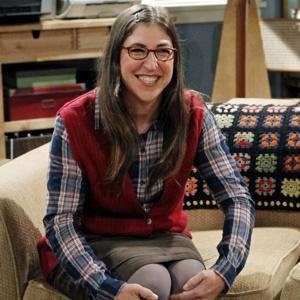
If I'd known what I now know about myself when I graduated from high school at the age of 16 (after skipping my junior year), I would have gone straight to college and studied neuroscience rather than taking the massive detours in life I did to arrive I'm not quite sure where. As I've said before, I share more with Amy Farrah Fowler than I care to admit--though I just did.

I have more in common with Amy Farrah Fowler
than I care to admit--though I just did!
Of course, the idea of lives as narratives is not brand new. Though I haven't been an active student since first becoming debilitated by illness in 2008, I am about halfway through the course work for my PhD in English (and thinking about trying to finish now--why not?). I've studied the concept of identity and personal narrative through that lens, a lens that does not conflict at all with my interest in neuroscience. These two seemingly disparate fields--English and neuroscience--connect (there's that word again!) in this arena. Our memories form the narrative of our lives, and memory is a key component of the scientific study of the human brain, just as narrative is key to English literature and identity studies.

Yet, as reassuring as all this is, it also lends itself to a scarier scenario, the scariest  part of neurodegenerative disease. Will I lose my narrative, my memories?

My grandmother was sharp as a tack and lived in her own apartment until she turned 86 and started calling my mom at 2 a.m. and asking her why it was so dark at 2 in the afternoon, putting the milk carton in the oven, and other wacky things. I saw her disease rob her of who she was, though she always managed a smile even when the nurses at the nursing home tranquilized the bejesus out of her, as was customary at the time.

And so, even if my demise isn't immediately imminent, I can't help but worry that I will lose my own narrative before actual death occurs, a sort of death of the personality, the person I am, or who I believe myself to be.

Does my life have a meaningful pattern? Do the good and bad things I've done or experienced all add up to a life that makes sense in some grand scheme, if only to myself? I have inklings of that sense of pattern, and that's encouraging.

It's easy for my romantic side to cling to those, but, in the dark nights while I'm wide awake and the rest of the eastern seaboard of the United States is sleeping, my inner skeptic creeps in and the idea that my accidental life on this random planet in an incomprehensible universe means nothing at all, nothing whatsoever.

And then I read something amazing by Oliver Sacks, and the darkness lightens.

No matter what the ultimate answer to this question of meaning ends up being, I have to agree with Sacks when he assesses his life in his new essay: "Above all, I have been a sentient being, a thinking animal, on this beautiful planet, and that in itself has been an enormous privilege and adventure." The privilege has been ours, Dr. Sacks. And the biggest privilege for me has been giving birth to the two best sons on the planet.


Epilogue: In a truly strange twist to this episode, I was just putting the caption on my Amy Farrah Fowler photo above when Honey walked in the room. Knowing my nuttiness for turtles, he said I needed to go to the living room and watch The Big Bang Theory: Amy (Farrah Fowler) and Sheldon were about to buy a turtle together. Just as the caption I'd just finished typing says, I have more in common with Amy than I care to admit.

Coincidence? Hmmmmmmmm

A little feller I rescued from the middle of the road
shortly before his release (and me)


Wednesday, February 25, 2015

Episode 57: From Peak to Poverty, Thanks to Poor Health: This Story Could Be Yours

There is "no difference among men, in intelligence or race, so profound as between the sick and the well" (F. Scott Fitzgerald, The Great Gatsby).
I was born with far more advantages in life than so many others on the planet.  From parents who loved me and were committed to giving me the best possible childhood and who made enough money so that I never worried about having food in my mouth or a roof over my head, to the happy accident of being raised on the outskirts of Washington, DC, one of the most powerful cities in the world with a myriad of opportunities, I have been utterly blessed.

Good grades came easy to me, and as I've bragged numerous times, I scored in the 99th (the highest) percentile in abstract reasoning in the standardized Iowa tests given to schoolchildren in many states, meaning that my scores were better than 99 percent of the rest of those kids.

My father's successful career in electronic engineering--with a patented update to a radar altimeter that flew in all commercial aircraft of the 60's, if I correctly recall what he told me--gave us a comfortable home. My brother followed in my dad's enterprising footsteps, becoming a computer whiz on the ground floor of that industry, retiring at the age of fifty as the head of computer security at a big state university, itself known for its technological advances.

My mother was, and my sister and other brother are, certainly no slouches in the intelligence department. Mom's facility with language gave her a sharp (but friendly) wit--she could not let a pun pass her by--and a talent for writing silly but clever poems for friends retiring and for scrap books for my kids.

Fresh out of college after taking off a few years to travel as a young, idealistic member of the hippie generation, my sister landed a plum job in a big suburban county teaching English in a magnet school.  My brother, who won a golf tournament at the age of sixteen, went on to purchase and run a highly successful hardware store close to Dupont Circle in Washington, DC, and acquiring property in that high-priced area through the years.

And then there's me.

Like I said, I had all the promise in the world.  I did have a couple of deficits, though, which no one realized when I was young--not even me, though I certainly felt their effects. These, generalized anxiety (plus a healthy dose of social anxiety) along with attention deficit disorder (ADD), made navigating the difficult waters of growing up more difficult for me than for my siblings--though that ride isn't easy for anyone. It's just that my siblings landed in better spots than I did, despite my many years of trying.

After skipping my junior year of high school and graduating at the ripe old age of sixteen, I (stupidly) decided college wasn't for me and opted for secretarial school instead. I was tired of school (that ADD thing), and I wanted a life like Mary Tyler Moore's on her popular show of the day--independent professional woman with her own cute apartment.

But by the time I was nineteen, I was married to my high school sweetheart, and we consciously began a family. Having been temporarily seduced into joining the Mormon church, I couldn't wait to hold a baby in my arms like those in the arms of all the other women at church.  During those years, though I adored my babies, I regretted I hadn't gone to college and took a few classes when I could: Novel writing I and II, British Literature I and II, Intro to Philosophy.

And then--BOOM.  Blessed childhood, future full of promise--all came to a screeching halt.  The first clue that my life wouldn't be as perfect as I'd always expected it to be came when my first baby arrived two months early and suffered several severe health problems, including a skull malformation known as craniosyostosis that would affect his appearance and his psychic health forever (though the latter, I'm so happy to say, is very good at present, and I hope and pray it will continue to be so--and his appearance is absolutely beautiful, and I'm not just saying that because I'm his mom). In fact, I'm convinced to this day that my difficult pregnancies were the first real signs of the neuromuscular disease I'd later be diagnosed with.

My twenties were tough--but you can see how happy I am
holding my little preemie son (at two months)! He, and I,
unfortunately, had many health problems to come.

Then my dad dropped dead of a heart attack after a night out ballroom dancing with my mom, as they'd met some thirty-eight years before. And just four years later, my mom, who had battled breast cancer and then liver and pancreatic cancer in those four interim years, died in her bed in the home they'd bought in 1949.

My marriage, not surprisingly, given our young ages when we married and lack of much of anything in common, fell apart.

That about sums up my twenties.

Determined to make my thirties better, and to honor my dead parents and their shared belief in the value of education, I moved with my two little boys to a little mountain town in Appalachia with a state school.  My goal was to teach English.

I'd wanted to teach since I was a little girl, and I'd wanted to write since I was a little girl, too.  I used to dictate stories to my mom, who would type them up, leaving big blank pages for me to illustrate. Once I began English classes in junior high, I knew that's what I wanted to do. But after graduating from high school, my pathological shyness made me doubt I could stand up in front of a bunch of kids and command a classroom--and what was the point of going to college if I couldn't be what I wanted to be, I'd reasoned at the wise old age of sixteen.

I had so many wonderful teachers through the years who'd encouraged my writing, from Miss Rosenthal in fourth grade who'd assigned weekly compositions, to Mr. Bayz in eighth grade who'd declared my inscaping piece on the ocean "hauntingly beautiful," to Mrs. Righter who'd felt I was wasting my time in a regular core class and referred me to a gifted reading specialist who had me doing independent work while still in 8th grade, to Mr. Fowler and Mrs. Crowe who'd read my papers and stories out loud to my 9th and 10th grade classmates, to the even longer list of English professors who'd influenced me in so many ways as I worked through a BA, then MA in English, and on to about twelve credit hours into my PhD program in English.

I wanted to be one of them, and after my parents' deaths made me the beneficiary of enough money that I could choose a new life for myself, I decided it wasn't too late to pursue my dream job, even if I still was pathologically shy. I told myself I'd get over it, and eventually I did.

In the fourteen years between graduating from high school and enrolling full-time as a college freshman at age thirty, I'd worked as a legal secretary in a small firm in Silver Spring, and then in a large corporate firm in DC: Arent, Fox, Kintner, Plotkin and Kahn. I worked for one of the top international partners, and my skills were in high demand whenever I could manage to work overtime (which was difficult since I had my little boys at home).

I was promoted in the firm to the personnel coordinator, overseeing the leave requests and scheduling of 105 secretaries and assisting the Director in hiring and other personnel matters. I went on to become the assistant Attorney Recruitment Director.

Then I tired of the long commute and took a job as a senior secretary for a government engineering contractor at NASA's Goddard Space Flight Center.

But I was dissatisfied being "just" a secretary, and when my parents' estate settled, it seemed my career could do nothing but soar when I left Goddard to move to the mountains and pursue my dream of teaching English.

And my dreams continued to soar as I worked through my classes, earning A after A. I was where I was meant to be. When I graduated in 1994, I received Departmental Honors from the English Department, given to one student per graduating class.  I also took General Honors and graduated summa cum laude. 

The icing on the cake was receiving the Maryland Collegiate Honors Council Outstanding Honors Student of the Year award, also in 1994.

While working on my degree, I took care of my boys as a single mom and worked part-time at a local community college, where I eventually moved into planning and facilitating health courses for licensing and accreditation of health professionals. One of my coworkers, a woman nearing her sixties, told me during that time:

"The world is your oyster. Once you get this master's degree, you will be able to command your salary."

I was admitted to the West Virginia University Master's program in English and was granted a Graduate Teaching Assistantship with tuition waiver, as well as other scholarships. I took a job in a non-profit health education agency just after finishing my Master's Degree, and again I excelled.

When a co-worker became sick and was unable to write a big federal grant application to continue a program employing several of the persons at the agency became ill, and our associate director who normally would have taken up the slack was on vacation, I took on the job and, in one week, wrote a major grant application that was funded for close to a million dollars. From that point on, I wrote numerous federal, state, local, and private grants, garnering millions of dollars in the total of nine years I'd eventually work there.

Never happy letting an opportunity go by, when the non-profit agency's health librarian left the job to take a position as an executive director at another agency, I enrolled in a library science Master's program at the University of South Carolina and graduated with 3.98 grade point average a year and a half later while working full-time.

Ironically, the one "B" I received during that Master's program was in grant writing, something I'd done successfully professionally for some time by then. (I'd missed one of the minor requirements, as I recall.)  However, I turned the application I'd written for that class into a viable one, submitting it to the federal Institute of Museum and Library Services. And we won a National Leadership Grant with that application.

As much as I loved that job, though, eventually I landed my dream job:  teaching English in a two-year college in West Virginia which, after my first year, became part of the system of my alma mater, West Virginia University. As hard as that job came to be--teaching freshman English to 28 kids per class with a five-course load is enough to kill anyone--I had finally arrived exactly where I was meant to be.

I loved teaching. I didn't love grading, but I did it with every ounce of my soul, wanting nothing more than to help each individual student reach his or her writing potential. I still believe fervently that the ability to write is the key to success in academia and beyond. And I loved being the slightly wacky English professor who walked into her Poetry and Drama class wearing a Greek toga (over her "normal" clothes), a band of laurel leaves in her hair, demonstrating strophe and antistrophe while reading aloud from Oedipus Rex. 

When teaching Hamlet, I'd assign key scenes to groups, and the students would practice and bring in props and eventually act out their scenes on the stage in the building where I taught. I still have a plastic sword brought in by one class's Hamlet--he'd never come to my office to retrieve it, though it was his little boy's. Another Hamlet scored a skull from the Biology Department for his "Poor Yorick" scene.

One of my students as Hamlet, with a skull he'd scored
from the Biology Department, acting out the "Poor Yorick" scene

After a class in which students took different parts in Christina Rossetti's "The Goblin Market"--twittering as the eroticism of the dialogue came alive, several of the students left the room calling out in the hallways: "Come buy! Come buy!"

An Appalachian Lit class became a learning experience for me, as every student in the class had been born in West Virginia, while I was a Washington, DC, native! The final paper involved each student's telling his or her story about growing up in Appalachia, from the daughter of two hippies who'd spurned the city to homestead in the mountains to those who had grown up in the near-by town of Piedmont, immortalized in Henry Louis Gates' memoir, Colored People. 

Gates himself had attended the school where I taught, as I informed every amazed class I stood before, and he'd been inspired by his English professor, Tony "Duke" Whitmore, to pursue a degree in literature rather than medicine. The Duke had died three years prior to my starting at the college, and I wonder to this day whether I'd still have a job if he'd still been president when I became sick.

I wanted to be a Duke Whitmore inspiring students to love literature. I wanted to be a Mr. Keating in Dead Poets Society, a "Sir" in To Sir With Love, a "Teacher" in Catherine Marshall's Christy. I was thrilled to be working in a school whose students weren't born with silver spoons in their mouths. My "kids" came from the hollows of West Virginia and distant inner cities where the college recruited. I loved the "C" student in whom I could make a real difference; I knew the A's and B's would be fine. Of course, I enjoyed them, too, and I admired them, and I tried to help those struggling with D's and worse.

And I was well on my way to achieving what I thought would be my lifelong (if a bit late) teaching career, earning merit points based on my student, peer, and Review Committee evaluations. In my six years teaching, I was nominated "Outstanding Professor of the Year" twice--the awards went to professors who'd been there longer--and, in a school newspaper poll of fifty students in the cafeteria, I was runner-up for "Most Unforgettable," second only to the beloved cafeteria lady, the students' mom away from home! And I was told by the campus provost, just a few months before being given my pink slip, that I was a "shoo-in" for tenure.

I remember walking across the quad under the massive oaks and maples, realizing that yes, Mary, you finally did it!  You have found the place where you'll be the rest of your life, doing exactly what you've dreamed of doing your entire life.

I had a campus full of friends in the coworkers I enjoyed every single day, along with the fondness and appreciation of most of my students.  On the little board outside my office, where I hung my New Yorker cartoons as many other English profs had done before me, a student had written at the end of the semester:  "Ms. Spalding rocks!"

And then I was out on my ear.

Why?

Because I got sick.

Yes, this is the simple truth.  No other truth exists.

Beginning in the years I was going to WVU for my Master's classes and working at the community college and then the non-profit agency, my stamina became an issue.  Yes, I was doing a lot, but I began feeling like an 80-year-old woman.

Long story short, I came down with severe, intractable hypertension at the old age of 38, even though I wasn't overweight or stuffing myself on salt or anything else. My only risk factor was my father's legacy of hypertension.  That was enough.

Through the years, my health tanked.  After thirteen years of blood pressure regularly going as high as 208/135 (that was the worst, but it came close to that nearly daily in my last year of teaching), I was finally diagnosed with an adrenal adenoma, adrenal hyperplasia, and primary aldosteroism, also known as Conn's Syndrome.

Shortly after that diagnosis, I spent a summer in apparent heart failure and, determined to get to work in the fall, kept telling myself I'd feel better until one night I was certain I was going to die and went to an emergency department.

I was admitted, told I was indeed in heart failure and had probably had one or two heart attacks already.

There I was, forty-nine years old, on my deathbed.

And from my deathbed I talked to my chair in the English Division at my college, who covered my classes. But I didn't get better, and it was clear I'd need yet another semester off.  (I'd taken one off when the adrenal problem became known, and then I'd worked .6 FTE the following semester in the tutoring center while trying to regain my strength.)

And because I wasn't worth another 15 weeks of recovery time--I truly believed then that, once I was adequately treated for the newly found adrenal problem I would be able to go back to work without any problems--I was told I wasn't wanted back.  This, as I say, just a few months after the campus provost told me I was a "shoo-in" for tenure.  What had changed?  Nothing but my health. And if you think a person can't be canned for his or her bad health, think again.

You see, I'd inconvenienced the Dean of Curriculum and Instruction, a curmudgeon disliked by all the faculty. I'd pissed him off by going into heart failure just as the semester began, necessitating his replacing me for the semester. Somehow, I hadn't managed to dash off a request for a leave of absence before arriving in the ED in heart failure. How unprofessional of me.

Anyway, I got the official letter saying I'd failed to ask for that medical leave of absence in advance and was being asked for my resignation, or be terminated.  Of course, I didn't resign.  Why should I? One of my coworkers had suffered a massive stroke the same semester I was out for my adrenal problems, and he clearly would never teach again, but he remained on the roster until well after I was canned.

Oh, I tried to protest. I filed an appeal that failed, as nearly all first ones did, but I was eligible for two more appeals, and I was told by numerous persons, even one in the West Virginia Higher Education Council, that I would surely have my job reinstated. I overheard the WVU lawyers in the ladies' bathroom during a break in the hearing I did attend saying, "Wow, this really shows how bad the system is."

But guess what, sports fans?

I was sick.  Very sick.  Filing a bunch of paperwork and dealing with all the red tape of an appeals process was beyond my ability at the time.  I needed to heal, to recover.

All my life I'd been blessed by coworkers and others with whom I interacted on a daily basis who valued me.  When I left the DC law firm, one of my bosses pulled me aside and begged me to stay.  "You aren't like the rest," he told me.  "They're the worker bees. But you, you are someone special."

Not very special, apparently.

Losing my dream job happened seven years ago, and sometimes I still wake up and wonder how everything went to hell so fast and so completely beyond my control.

After a year of unemployment while I struggled with the hypersomnolence that has taken over my life today, I was rehired by the health education non-profit agency, where I again wrote millions of dollars of funded grant proposals.

But eventually my health problems interfered too much with the organization's structure--it got to the point when I could barely be awake during the day, only at night--and though I'd argue I can write better at 3 a.m. than most can any time of the business day--it's true I couldn't fully participate in the day-to-dayness of the job. Though I was working on several major projects at once and, I still believe, held my own, I could do that only by working on my own schedule, and that just wasn't cutting it anymore. I knew it was time to go, and my boss, who is a friend, thought so, too. I needed a long rest, actually.

And, fact is, I couldn't have kept teaching full time.  I couldn't keep working a full-time job.

My talents and abilities have been hijacked by my utter lack of energy, the result, I finally learned, of a neurodegenerative disease. I still don't know which neurodegenerative disease, but my neurologist said he'd diagnose me with MS except that I don't have lesions in my spinal column. I do, however, have lesions throughout my brain, along with many other symptoms of neurodegeneration that I've chronicled here. The latest is REM sleep behavior disorder, during which I act out uncharacteristically violent dreams, a common precursor to Parkinson's and other neuro diseases.

And so here I am, put out to pasture.

I try to stay busy.  I love to sew and embroider and read and write, and I do those things.  Once this god-awful winter is over, I will love being out in the yard and woods whenever I have the energy to do so.

I still believe I could teach one or two classes a semester. I just can't work full-time anymore. But I still have so much to give.

The reality of my situation, where I am today, hurts. I try not to dwell on it, but some days it's difficult to push away the nostalgia and the wonder about what might have been. I went from being at the peak of my professional life to unemployable in just a few years, and not because of anything I did to make that happen, other than get sick.

The psychic pain is the worst, but the practical side of it sucks as well. At long last, I enjoyed a comfortable salary for someone living in Appalachia for a couple of years, but in an even briefer period of time fell unceremoniously into poverty.

I now receive federal disability payments, thank god, but they are barely enough to keep the home where I still live with my adult disabled son. It's the only tangible thing I have to show for my struggle to attain professional success, which I did.

Even landing my dream job.  And losing it, through no fault of my own.

I tell this tale to let the world know that those of us in the 47 percent are not all here because we are lay-abouts and losers. In fact, I'd venture that few of us are.

In fact, you could find yourself right here where I am in the blink of an eye, no matter how successful you now consider yourself.

You know the old saying, "There, but for the grace of God ...."

Oh, I still live in the grace of God, if God exists. I have nothing, truly, to complain about. I've never worried, really, about being hungry or bombed out of my home. I still have all the blessings of my birth, even if the outward acknowledgement of those blessings is not so obvious. I am not bitter, and I am not done.

I write simply to remind us all of how easy losing what we have can be, and to keep gratitude at the forefront of our lives. And, yes, to tell my story. Because I can still do that.

I can still write.


Epilogue:  The very same night I posted this episode (tonight, in fact, or this morning, given that it's almost 2:45 a.m.), my former boss at the non-profit asked if I'd be willing to look over a project I could possibly do on contract.  So here's another reason for this episode, and it goes out to others who are suffering from chronic illnesses that nipped their promising careers in the bud:  Don't give up.  It's hard; it's very, very hard, but don't ever give up. We are sick, but we are not without talents and abilities that can find their places in this world. We are sick, but we aren't done.

Wednesday, February 18, 2015

Episode 56: Latest Health Care From Doctors of All Stripes: "Just Go to the Emergency Room"

Doctor
Thanks, ClipArt101.com, for this
very pink physician! Not that
color has anything to do with
how good or bad a doc is--
just appreciate the free graphic.

Remember when the stereotypical advice from a doctor was "Take two aspirin and call me in the morning"?

Well, guess what it is now?

"Just go to the emergency room."

This is yet another example of today's health care system's passing the buck at the expense of each and every patient, AND the system itself.

I've worked in health care for many years, and I know for a fact that the emergency department is the most expensive place for a person to seek care.

So why are doctors increasing health care costs by sending patients there instead of seeing them in their offices?

In today's case, I have to admit it is my dear, eminent Dr. A who has resorted to this non-answer. He is my neurologist, and I admire him greatly, but when I called today and told the office about my nearly non-stop headache for the past week and my new sleep behavior problems, I was called back and told, you guessed it, to go to the emergency room.

Why aren't doctors taking care of their patients anymore?

About a year ago, I was having a myriad of problems, and my regular doctor, or PCP (Primary Care Provider) in medspeak, told me I just needed to be admitted and a bunch of tests run to figure out what was going on.

Stupid me, I told her I didn't want to go to our local hospital, since it nearly killed me a few years ago, and said I wanted to go to one in the next town over where a number of my specialists are.

The next day I changed my mind, called her office, and received a call back that said, you guessed it, "Go to the emergency room."

When I did that, I told the attending physician that my PCP had said I should be admitted.

He gave me a scornful look and said, "What are we?  A McDonalds?"

And the visit went downhill from there.

Sports fans, I've been to the emergency department, and it is an utter waste of time unless you have a gunshot wound or have broken an ankle. For the problems I have, I'm given the same battery of tests, and none of them pinpoint the problem. I learned this after I was told numerous times when I couldn't breathe properly--NOT when I actually could not catch my breath to the point that I was about to die of suffocation, but chronically, and seriously--to go to the ED.

And each time I went I was given the same tests that showed nothing at all. And yet, calling specialists about the problem, I was still given that same old non-answer. And despite all the signs and symptoms of being deoxygenated on a regular basis, no one has cared enough to really get to the bottom of it.

Send patients to the emergency room to doctors they've never met, racking up costs that are higher than if we are seen in a doctor's office, without the benefit of our own doctor's history with us and knowledge of our case.

Does that make sense? Yet, that's what doctors are doing today.

My headaches are bad, and I told the person on the phone that, but I said they weren't quite as bad as migraines, which I've had before.  It's true they are affecting my ability to eat anything--everything looks nauseating to me--and I know migraines cause nausea. But I also know what a migraine is--you can't stand being alive; light hurts; sound hurts; and vomiting adds to the misery without giving any relief.

No, my headaches right now aren't that bad. But they're pretty darned close. I just lie in front of the TV, with the sound low, and pretty much stare into space. I feel nauseated if I think of food, and all I can think about is the pain in my frickin' head. I mean, they're miserable.

Is that enough for me to go to the ED?

I don't think so. I really don't.

But maybe my doctor could see me; maybe he could talk to me and try to get to the bottom of the problem. He is a neurologist, after all--and the emergency room doctors are NOT.  Moreover, I'll be lucky to see a doctor if I go there; most likely I'll see a physician's assistant or a nurse practitioner, which are fine with colds or flu or that sort of thing, but they don't have the training to deal with my myriad of health problems, including serious neurological issues.

If my neurologist had agreed to see me, maybe he could have ordered the appropriate tests to see whether, perhaps, the mass found in my sphenoid sinus in 2012 has spread. Maybe he could tell, by the way I describe my headache, what type it is. Maybe he could prescribe something to help.

I am so confused. Supposedly, doctors are on board with reducing health care costs. So why are they now, as a matter of course, sending their patients to the Emergency Department, the most expensive place to receive care?

Not only that, why are they forsaking their patients this way?

I don't know.  I guess I'll go to the damned ED if my head feels like it did last night--and the headaches get worse as the evening wears on after I wake up. (Being hypersomnolent, I sleep all day and usually emerge sometime between 6 pm and 9 pm, and that's when the headaches have begun.)

I'm not happy about it, though. Why go for substandard care at increased cost for something that could be handled through my own doctor's office?

Well, sports fans, I guess I don't have any damned choice. I feel like crap, but I have to pull myself off the couch, go out in zero degree weather here in the mountains, and drive to a place where I"ll have to sit among a bunch of people coughing and hacking, only to be seen by a person without the neurological training to truly get to the bottom of what's going on.

Does that make any sense?

Oh, and I forgot.  My car won't start.  The cold has killed its battery.

True, I'd need a car to get to the doctor's office, but I could perhaps borrow one for such a trip--but when going to the ED, who knows how long it will take, and it's hard to borrow a car when you have no idea when you can return it.

Yes, it's just so easy when you're sick.

"Just go to the emergency room."

Hey, U.S. health care system, you are one sick patient.  YOU'd better go to the emergency room! Not, as I already know, that you'll get the diagnosis or care you need there unless, indeed, you have a traumatic injury of some kind.

The ED is NOT for problems such as the ones I'm dealing with right now. But that's what I'm told.

"Just go to the emergency room."

Maybe it is a McDonald's after all.  God help us all.


Sunday, February 15, 2015

Episode 55: Headache, Nasty, Nasty Headache

headache%20clipart
Thanks, ClipartPanda!
She looks like my mom!

This headache has lasted about four days now, though it briefly disappeared today before reasserting itself most obnoxiously.

Despite medicating myself with Tramadol, which my kidney doctor told me I should be taking rather than NSAIDS--your typical, over-the-counter pain killers--as well as Aleve Sinus and Cold (containing an NSAID--but desperation leads to recklessness), and 3 tabs of Ibuprofen (another NSAID) and back to yet another Tramadol, well, sports fans, the headache remains.

And it's a bitch. Honey gave me a heating pad to put behind my head, along the skull base, where it and my neck were hurting.  But no sooner did the heat help that area that the headache moved to across the top of my head.  Meanwhile, a constant low-grade pain and pressure resides right behind my eyes.

I've had headaches over the years, including bona fide migraines, complete with vomiting.  These are not migraines, but they're fairly debilitating nonetheless. I know I don't feel like doing much of anything. It's Valentine's Day, and Honey had mercy on me and didn't even pressure me to make love.

He could see I was in pain.

That's one of the reasons I love that guy. Though making love to him is another reason I love him, and it would be nice to actually feel like doing that once in a while--but it's as if my sex drive switch has been turned off, literally. And not because Honey isn't the sexist, sweetest man alive.

But I digress.

This sudden onset of intractable headaches, combined with my also sudden and recent onset of REM Sleep Behavior Disorder, can't help but make me think something more acute than mere neurodegenerative disease (with which I've been diagnosed) is going on.  Something becoming acute. What might it be?

Then I remembered:  Two years ago, when my episodes of weakness and breathlessness upon slight exertion began, an MRI showed that I have a mass in my sphenoid sinus.

According to the literature, any mass in that sinus--the one closest to the skull base--should be investigated. I was told by my Ear, Nose, and Throat specialist (ENT) that mine was most likely a benign polyp or cyst, and that was the end of it.  Unless it wasn't.

Tonight I did some more research and, in fact, even benign processes such as those suggested by my ENT, or mere inflammation, can cause symptoms such as headache--in the very areas mine has been hurting--and other neurological symptoms.  For instance, problems with the trigeminal (5th cranial) nerve may originate with sphenoid sinus problems.

I've had about five instances of trigeminal nerve neuropathy, in which a light touch beside my nose led to an electrical shock down the side of my nose and across the bone above my top teeth.  This is, in fact, the trigeminal nerve and one of its branches.

So now, sports fans, I can't help but wonder--is, in fact, problems in that sinus the root of my problems?  I've already said numerous times that my medical problems frequently originate in the hypothalamus, a little bitty part of the brain just behind the sphenoid sinus, that is responsible for regulating the hormones that control our autonomic functions--sleep, breathing, hunger, sweat, sex drive, etc.--all of which have been problem areas for me for several years.

Oh, well.

One can only speculate.

And one can call the eminent, wonderful Dr. A, her neurologist, Monday morning.

It sure can't hurt to take another look at that mass in that ol' sphenoid sinus.

Wouldn't it be wonderful if what is happening to me turns out to be curable, albeit with a rather nasty and risky surgery?  I'll take those odds over slowly degenerating neurological function, so here I am, almost hoping there is such a problem.

All I know is, I want this frickin' headache to go away.